Branding · Field service & trades
Branding for HVAC and trades companies
Your vans, shirts and quotes were each done at a different time by a different supplier, and a buyer comparing you against two other contractors can tell. We design trades brands that work on the vehicle, the uniform and the paperwork first, and we plan the rollout so nothing gets paid for twice.
Sound familiar?
Where trades branding projects usually start
These projects rarely start from nothing. They start with a logo that's been applied four different ways by four suppliers.
Every van tells a different story
The newest van carries the current logo, the oldest carries the one before it, and the one in the middle has a sticker over an old phone number. Parked together, they look like two companies.
The logo falls apart off the screen
It looked fine in the designer's email. As cut vinyl it lost its thin lines, embroidered it turned into a smudge, and on the one-colour invoice nobody can read the words under it.
The name on the van isn't the one a buyer finds
The van says one trading name, your registration sits under a numbered company, and a facilities manager who checks the registry before hiring you finds nothing that matches.
Nobody has the master file
The only editable version sits on a computer at a sign shop you stopped using, so every new supplier redraws your logo from a JPEG, slightly differently each time.
What we design
Branding we design for HVAC and trades companies
A trades brand is finished when it works everywhere a customer meets you, and most of those places are vinyl, fabric and paper rather than screens.
A logo built for vinyl, thread and one-colour print
A mark designed in one colour at chest-patch size first, so it survives every machine that reproduces it. Colour gets added once it works without it.
Vehicle graphics layouts
Side and rear layouts for your vans and trucks, in light-panel and dark-panel versions, with room for the phone number and for any licence number you're required to display.
Uniform and workwear artwork
A stitch-ready version of the mark kept above your embroiderer's minimum size, with thread colours specified the way they order them.
Quote and invoice templates
Templates with your trading name and legal name side by side, the licence line as text, and a layout an accounts team can raise a purchase order against.
Tags, door hangers and jobsite signs
The small pieces that outlast the job: the tag left on the unit, the sign at the site and the leave-behind, each in a version that reads in one colour.
Your website and enquiry screens
The same identity carried onto your site and the screens customers use to enquire or book, so the business they find online is the one that turns up in the van.
How it works
How a trades rebrand runs
Most of the cost in a trades rebrand is applying it, not designing it, so the work runs in the order that stops you buying anything twice.
Count the surfaces and settle the name
We list every place your name appears, from vans and shirts to quotes, tags and the voicemail greeting, and agree which trading name goes on all of it and how it relates to your legal name.
Gather your suppliers' specs
Before anything is drawn, we collect the file formats, colour systems and minimum sizes your wrap shop, embroiderer, printer and sign maker work to, so the design fits inside them.
Design in one colour, then add colour
The mark is drawn in one colour at the smallest size it has to survive, then tried on the van, the shirt, the invoice and the tag before colour is chosen.
Prove it physically
Before sign-off we look at a vinyl sample, an embroidery stitch-out and the quote template printed on your office stock with you, in the light where the work actually happens.
Plan the rollout
Templates, email signatures and profile images change the same week. Vehicles change one at a time, whole, when their graphics are due anyway, and uniforms turn over as they're reordered.
What you get
What you have at the end
Everything a supplier you've never met needs to produce something you'd be happy to see parked outside a client's building.
- Editable master files of every version of the mark, kept by you rather than on a supplier's computer
- Vehicle layouts for light and dark panels, with space planned for the phone number and licence line
- A stitch-ready version of the mark and thread colours for your embroiderer
- Quote and invoice templates with your trading and legal names reconciled
- Your colours specified separately for vinyl, thread, print and screen
- A short brand guide and a rollout order your suppliers and office can follow
Licences and registries
Licence numbers, registrations and the name on the van
Trades branding has a constraint most industries don't: part of what goes on the vehicle and the paperwork isn't yours to style. In Ontario, the Electrical Safety Authority sets how a Licensed Electrical Contractor displays its licence number on a vehicle, and if a TSSA registration is what makes your fuels work legal, it belongs on every quote. We plan space for those in the first layout and work from the current requirement, which you confirm with the regulator.
The registry matters as much as the van. A commercial buyer who checks your registration before hiring you needs to find the name they saw on the truck. If your trading name, numbered company and WSIB account don't line up, we'll raise it early, though fixing the registrations is a job for you and your accountant, not a design task.
We design the artwork and write the specs. Your wrap shop, embroiderer and printer still produce and install it, and their lead times set the pace of the rollout.
Why Rigoris
Why work with us on a trades brand
You shouldn't need a design background to tell whether a rebrand is on track.
A fixed cost against an agreed scope
We define what's included with you and quote a fixed cost, so the design work doesn't keep growing while the vans wait for it.
Brand and website from one team
Branding, website design and development sit with the same team, so the identity on the van and the one on your site come from the same decisions.
Honest about what you need
If your mark already works and the problem is that it's applied four ways, we'll say so and scope the system and the rollout rather than a new logo.
Related work
See the work in context.
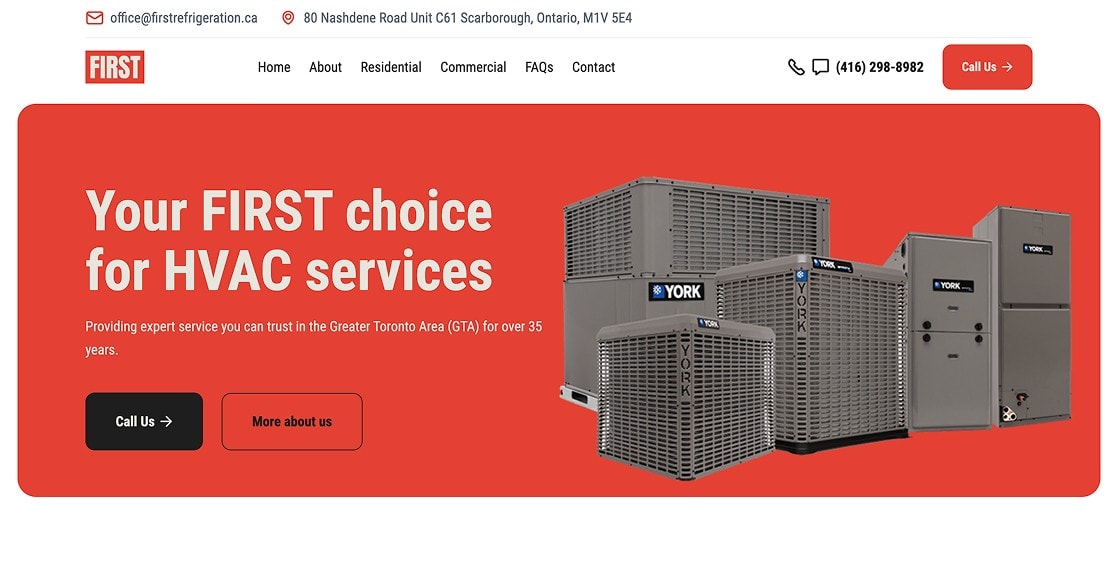
First Refrigeration
FIRST Refrigeration
Branding and Website development
Branding · Logo Design · Web Design
Explore the case studyBefore we talk
Common questions
Often the second. If the mark is legible in one colour and at a distance, and the real problem is that it's used four different ways across four suppliers, that's a system and rollout project rather than a redesign. We'll tell you which one you're in before you commit to either.
Usually more than for a bigger firm. The smaller the operation, the harder a buyer looks for evidence you're established, and consistent naming plus one legible mark on the van is the cheapest version of that evidence. A brand strategy exercise would be overkill. Making the four places you appear agree with each other isn't.
It depends on the scope, so we quote a fixed cost once we've agreed it with you. What moves the number most is whether you need a new mark or a system around the one you have, how many vehicle types need their own layout, how many templates and leave-behinds are included, and whether the website is part of the same project.
No. We design the artwork, write the specs and hand over the files your suppliers need. Your wrap shop, embroiderer and printer produce and install it, and we're happy to work with the suppliers you already use, since their limits shape the design anyway.
Yes. The same team handles branding and website design and development, so the site can be planned alongside the brand rather than after it. If your identity already holds together, we'll leave it alone and put the work into the site.
More for field service & trades
Your next step
Bring the part you're unsure about.
A short call is usually enough to tell whether this is the right work for you. You'll leave it knowing what the first piece of work would be, and if we're not the right fit, we'll say so.