Mobile app development · B2B SaaS
Mobile app development for B2B SaaS products
Your customers want your product on their phones, and the people asking are rarely at a desk when the work happens. We build mobile apps for B2B SaaS products around the few jobs that belong on a phone, planned so store review, old versions and a weak signal don't turn into surprises.
Sound familiar?
Where B2B SaaS mobile app projects usually start
The request usually comes from a customer, and it usually arrives bigger than the app people would actually open.
A customer has asked for an app
A large account wants your product on its staff's phones, and the request arrived as a list of screens copied straight from your web app.
Work gets typed up later
Their people photograph a form on site and re-enter it back at a desk, because there's no way to capture it where the work happens.
IT wants it on managed devices
A customer's IT team wants the app pushed through its own device management and locked to its own staff, rather than downloaded from the public store.
A security review is waiting
Before rollout, an enterprise customer wants to know exactly what data sits on the phone and what happens to it when a device goes missing.
What we build
Mobile apps we build for B2B SaaS products
The app does a few jobs well and hands everything else back to the web app your customers already use.
Capture where the work happens
Forms, photos and barcode scans recorded on site, saved on the phone and synced when there's signal, with each record's status shown on screen.
Approvals in under a minute
Requests someone can approve between meetings, with just enough detail on screen to decide and nothing that needs a desk.
Notifications worth reading
Alerts for what can't wait, with a switch for each type and the marginal ones off by default, so people don't learn to swipe them away.
Quick lookups
The one fact someone needs while standing in front of the person who asked, a couple of taps from the icon.
API and release support
Changes to your API so it answers several app versions at once, plus settings held on your server so behaviour can change without a store release.
Store and managed distribution
App Store and Google Play submission, a reviewer login that works, and set-up for customers who install apps through their own device management.
How it works
How a B2B SaaS mobile app build runs
Most of what makes a mobile app expensive gets decided before the first screen, so that's where we spend the early weeks.
Cut the scope
We list the moments your customers work away from a desk, score them by how often they happen and where, and find the two jobs that will carry the app. You get a written scope, including what stays on the web and why.
Plan for versions and signal
Before any screens, we agree how many app versions your API supports, when the app insists on an update, which settings live on your server, and what each job does with no signal.
Design and build
Flows and screens for the chosen jobs, built cross-platform unless your list says otherwise, and tested on the cheapest handsets your customers carry and on a bad network.
Submission and rollout
We prepare the store listings and a working reviewer login, leave room in the plan for a rejection, and set up managed distribution where a customer needs it.
After launch
Apple and Google change the rules on their own calendar, so an app needs looking after. We stay on through operating system updates, store rule changes and the next set of jobs.
What you get
What you have when the app ships
Enough to release the app, support it, and answer your customers' IT teams when they ask.
- A written scope naming the jobs on the phone, and the ones left on the web with a reason
- A fixed cost, agreed against that scope before the build starts
- An iOS and Android app, tested on low-end handsets and a weak network
- A version policy: how far back your API supports, and when the app insists on an update
- A release process for both stores and any managed distribution
- A written answer to what's stored on the device and how it's cleared
Enterprise rollout
Your customers' IT teams decide how the app arrives
In B2B, the person holding the phone usually didn't buy your product, and their employer often controls the phone. Some customers push apps through their own device management, some lock them to their own staff, and many run a security review before anything gets installed.
Those answers change the build, not just the paperwork: how the app is signed, whether it arrives set up for the customer's account, and whether staff sign in with the identity they already have. Public and private distribution can also need separate app records, so we settle the route before the first submission.
Native code for each platform is sometimes the right call, for continuous background location or heavy on-device media work. For most B2B jobs cross-platform is the better default, and we'll show you which way your own list points before you pay for two codebases.
Why Rigoris
Why work with us on a B2B SaaS mobile app
A mobile app outlives its first release by years, so how it's planned matters more than how fast it's built.
Web and mobile from one team
The same team can work on your web app and your mobile app, so names, permissions and the order changes ship in stay consistent across both.
A fixed cost for a defined release
We scope the release with you and quote a fixed cost before the build starts, so you know what the app costs before anyone writes code.
Honest about what goes on a phone
We'll tell you which requested features belong in the browser, so the budget goes to the jobs people will actually open the app for.
Related work
See the work in context.
CTC Communications Corporation
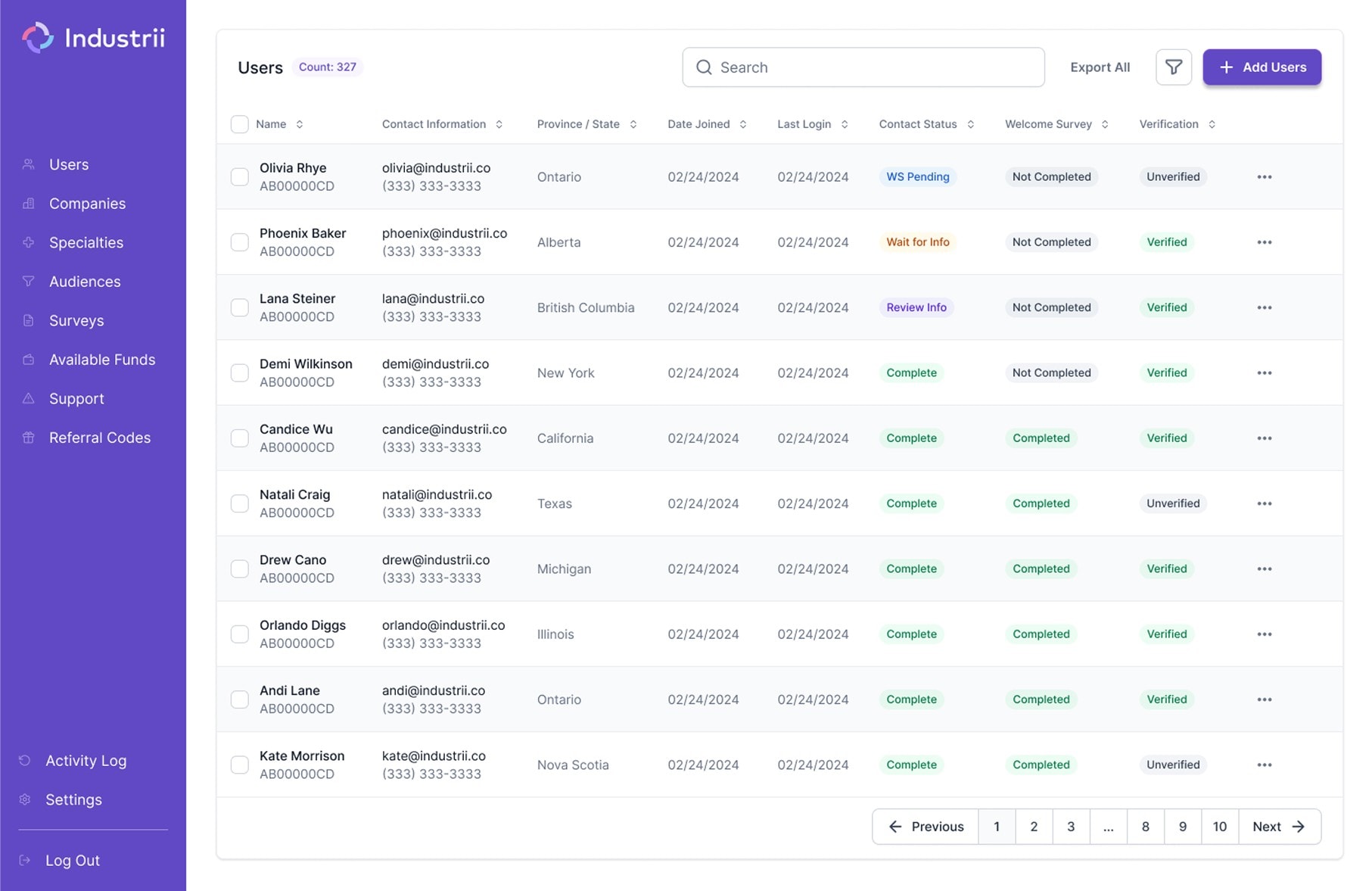
Industrii
Surveys for Healthcare Professionals
UX/UI Design · Mobile App Development · Web App Development
Explore the case studyBefore we talk
Common questions
Yes, including the review process, the store listings and the assets each one wants. The part worth planning around is what gets a first submission turned back: metadata, account requirements, or a reviewer login that doesn't work. Every fix goes back to the end of the queue, so leave room for one.
Almost certainly not, and trying is the most common way mobile budgets get spent badly. The phone should do the jobs that happen away from a desk and hand off the rest. A deliberately narrow app that people open daily beats a complete one they open twice.
We quote a fixed cost once the jobs on the phone are agreed, so the honest answer is that it depends on them. The number moves with how many jobs the app carries, how much has to work offline, whether it needs device features beyond the camera, whether you need both public and managed distribution, and how much your API has to change to support it.
Yes. Most of the server-side work is making your API tolerate several app versions at once and adding settings that let behaviour change without a release. We'd agree with your engineers who builds which part, and the order changes ship in, before the first release is planned.
Worth reading first
More for B2B SaaS
Mobile app development for other industries
Your next step
Bring the part you're unsure about.
A short call is usually enough to tell whether this is the right work for you. You'll leave it knowing what the first piece of work would be, and if we're not the right fit, we'll say so.