
Custom software development
You can't read the code. You can still tell whether it's going well.
We build web apps, mobile apps and the systems behind them. The price is fixed before we start, and there's working software on an environment you can log into every couple of weeks.
Web applications
The thing people log into
Mobile apps
iOS and Android, one backend
Integrations
Between tools you already pay for
Backend and data
Auth, jobs, deployments
What we build
Software that has to work on a Tuesday, not just in a demo.
Web applications
The platform your staff or your customers use every day. Built to hold up under real use, with the boring parts done: permissions, audit trails, the screen someone sees when the network drops.
Mobile apps
iOS and Android sharing one backend with your web app, so a change lands in both places instead of one, and your team isn't maintaining two versions of the same rule.
Integrations and APIs
The plumbing between the systems you already pay for, so the same numbers stop getting retyped into three places and reconciled by someone on a Friday afternoon.
Backend and infrastructure
Databases, background jobs, permissions and deployments, set up so the thing keeps working when the traffic arrives and can be rolled back in one command when it doesn't.
How it works
From a scope you agreed to a system you own.
Scope it
We agree what's in, what's out and what each piece has to do. That document is what the fixed price is quoted against, so there's something to point at later.
Shape the system
We choose the stack and the architecture against your load, your budget and whoever maintains it in three years. Then we write down why, in language you can check.
Build in slices
Working software every couple of weeks, on an environment that's yours. You use it and tell us what's wrong while changing it still costs an afternoon.
Test, ship, hand over
Automated checks, a deployment you can roll back, monitoring and documentation. The repository has been in your name since the first commit.
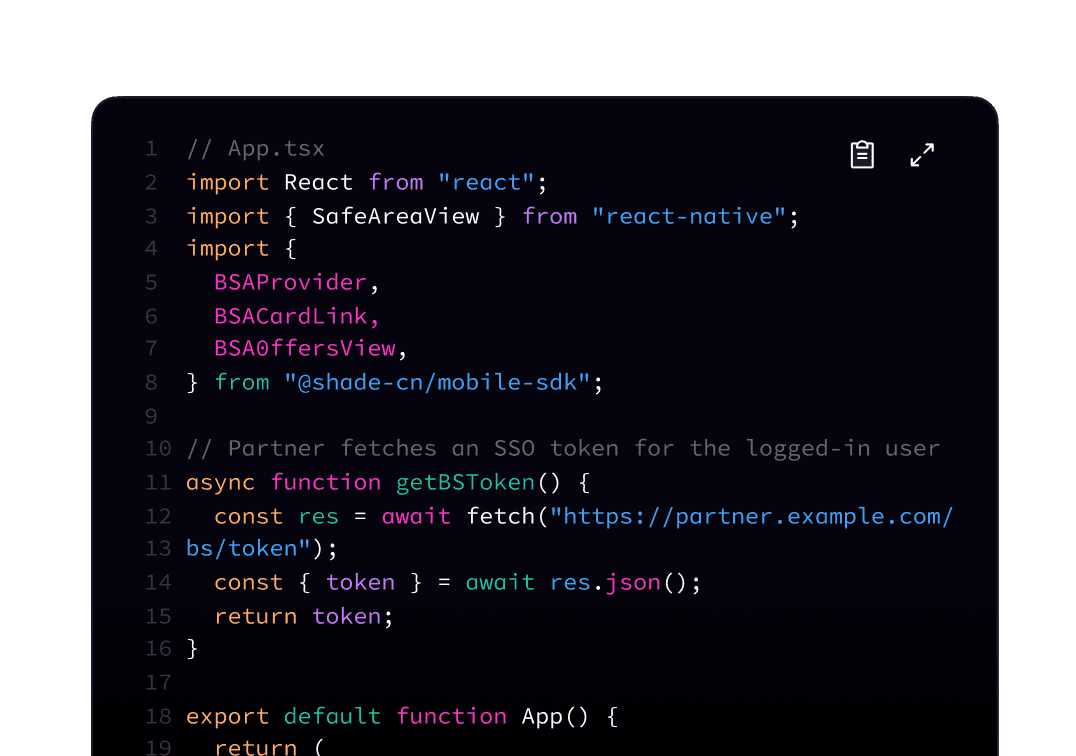
You will never read this. Somebody accountable to you will.
That is a mobile app asking a partner's system for a sign-in token, which is the kind of detail you are not meant to follow. What matters is what surrounds it. A second engineer reads it before it merges, tests run on every change, and it sits in a repository with your name on it. Those are things you can check without knowing what a token is.
This work, in one industry
Being straight with you
When this isn't what you need.
The feature list is still an argument
If what to build is genuinely unsettled, building is an expensive way to have that conversation. Settle it on paper first.
Product strategyIt's a website, not an app
Pages that carry an argument to a visitor are a different job from software people log into, and the cheaper one.
Website design and developmentA build is already underway and going badly
Get a read on what you have before adding to it. Sometimes the honest answer is that the existing work is worth keeping.
Product readiness reviewQuestions we get before the first call
The ones people ask once they trust you enough to ask them
You log in and use it. Every couple of weeks there's a build on an environment that's yours, with a plain-language list of what changed. That's a better signal than a status report, and it's the one we hold ourselves to.
You do. The repository sits in your organisation from the first commit and the accounts the system runs on are in your name. If you replaced us tomorrow, another team could pick it up.
It will. We price the change, you decide, and it goes in writing before anyone builds it. What we don't do is absorb it quietly and take it out of the quality somewhere you can't see.
Often, yes. We start by reading what's there and tell you honestly whether it's worth building on or worth replacing. Sometimes that answer costs us work. We give it anyway.
Most of our engagements keep running. Support, changes and the next set of features on a fixed monthly fee, so you're not renegotiating every time something needs doing.
Tell us what it has to do. We'll tell you what it takes.
A short call, no deck. You'll leave knowing whether this is a two-month build or a two-year one, which is usually the thing nobody will say plainly.