Mobile App Development Company in Markham: How to Choose
By Rigoris Digital
The short answer
Most Markham and York Region businesses searching for a mobile app development company actually need a business app: software their own staff and customers log into, not something in an app store. Decide which of the two you're buying first, then judge a firm on what its discovery phase produces rather than on how close its address is to yours.
TLDR
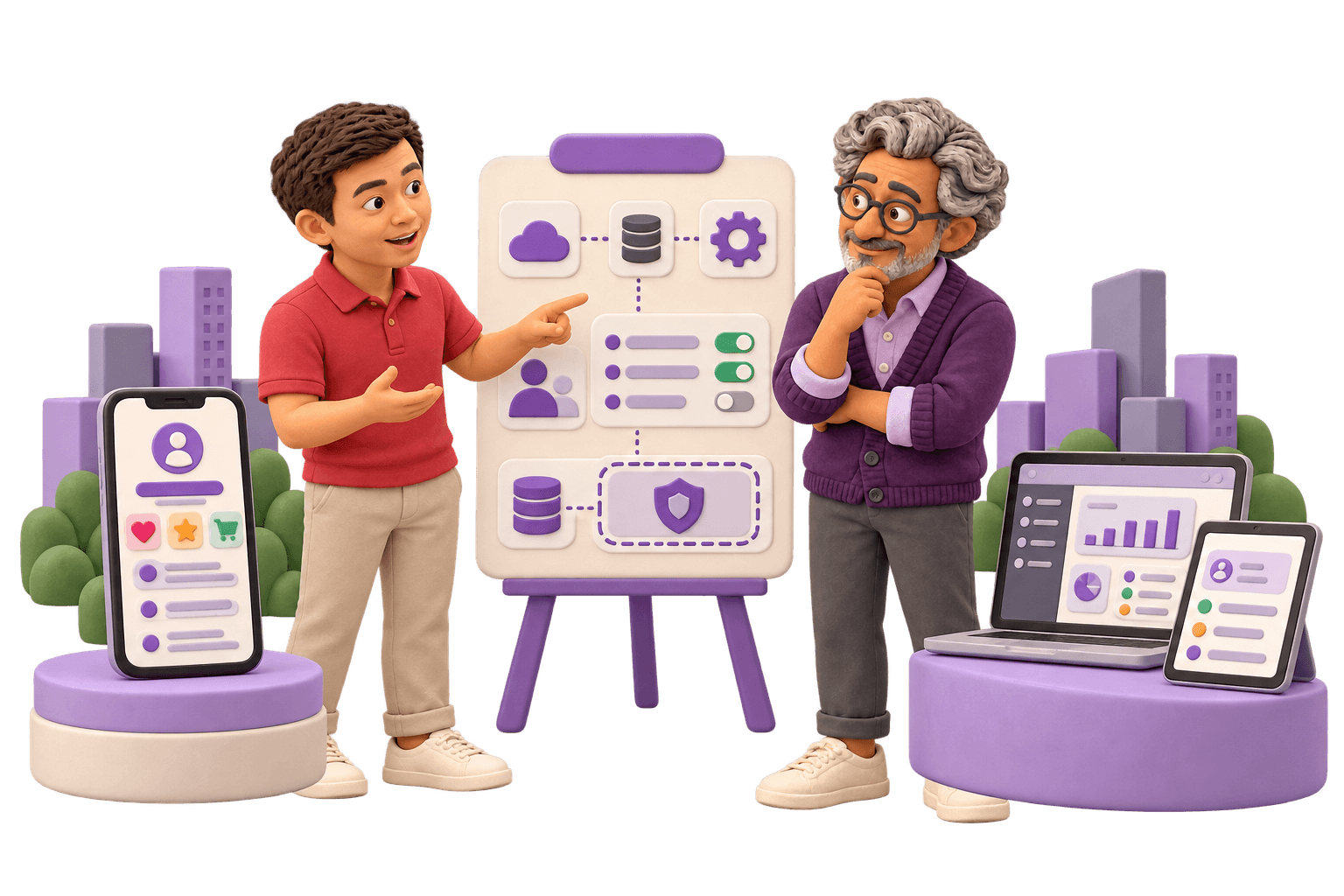
Two products hide behind one search. A mobile app ships through an app store to people who don't work for you. A business app is software your own staff and customers log into.
Markham's employers are manufacturers, distributors, professional services firms and technology companies. The software that pays back for most of them is operational, not consumer.
Proximity buys a shared working day and someone who'll come and watch the work. It doesn't buy better code, and a local address doesn't tell you where the build gets done.
Ask what a firm's discovery phase produces before you ask what it costs. A firm that can't show you a scope document is quoting a guess.
First builds break in four places: the integration nobody scoped, the permissions nobody discussed, data that isn't the shape you assumed, and the obligations that start at launch.
Every result on that first page is somebody's sales page
Search "mobile app development company Markham" and every result on the first page is an agency describing itself. That isn't a conspiracy, it's what a commercial query returns, but it leaves you comparing seven versions of the same claim with nothing to compare them on. The work that decides how this goes happens earlier, in two questions none of those pages answers: which kind of app you're buying, and what being close to a firm is actually worth.
Mobile app or business app? Most Markham buyers are shopping for the second one
Two phrases land in the same search box around here, and most firms answer both with one page: mobile app development, and business app development. They aren't the same product, and confusing them is how a company spends a year building the wrong thing well.
A mobile app is distributed through Apple's and Google's stores. Someone who doesn't work for you installs it, a third party reviews it first, and once it's on their phone you can't take it back. Apple publishes that gate in its App Store Review Guidelines: 4.2 requires an app to be more than a repackaged website, and 4.2.2 says that other than catalogs, apps "shouldn't primarily be marketing materials, advertisements, web clippings, content aggregators, or a collection of links." If what you have in mind is your website with an icon on it, that's a rejection, not a build.
A business app is software that runs your operation. Quoting, dispatch, job costing, inventory, an approvals queue, a client portal. It usually lives in a browser behind a login, sometimes with a phone app hanging off it for people who work away from a desk. Nobody reviews it, nobody downloads it, and you can change it on a Tuesday afternoon because everyone it affects is yours.
The failure modes differ, which is why this gets settled before you brief anyone. A mobile app nobody installs is a distribution problem, and distribution is a marketing budget most first-time buyers never planned for. A business app nobody uses is a process problem, and it usually means the software was designed around the process someone described in a meeting rather than the one the team runs.
The split, in one test
If the people using this are already on your payroll or already your customers, you want a business app. Whether any of it belongs on a phone is a later question, and we've answered that one separately: which jobs actually earn a place on a phone. If you need strangers to find and install something, you want a mobile app, and a plan for how they'll hear about it.

What Markham actually looks like from a buyer's seat
This matters more here than in most places, because of who the local employers are. The City of Markham's economic development service counts about 1,500 tech businesses and more than 34,500 tech jobs, and describes the city as holding the highest concentration of ICT workers in the country. It also counts 1,488 professional services businesses employing 27,806 people, about one sixth of Markham's total employment, plus roughly 700 businesses in advanced manufacturing. Those figures come from Markham Business, the City's own economic development arm.
Widen the frame to York Region and the shape gets clearer. York Link, the regional economic development office, counts more than 2,000 logistics and distribution companies, over 100 warehouses and distribution centres, and more than 5,100 financial, insurance and real estate firms.
Read that as a buyer profile, not a brochure. The person typing this search is far more likely to run a distributor whose dispatch lives in a shared spreadsheet, or a professional services firm whose client intake lives in an inbox, than to be building the next consumer app. That's a business app, and its payback is measurable, because you already know how many hours a week the current process burns.
There's a second consequence and it's less comfortable. You're hiring in the same labour market as those 1,500 technology companies. "We'll just hire a developer" is a harder sentence to finish in Markham than the job posting makes it look, and that, not cost, is the honest argument for buying a team instead of assembling one.

What proximity actually buys you, and what it doesn't
You added a city to that search for a reason, and it's a good one. You want someone you can get in front of.
Three things being nearby genuinely gets you. First, a shared working day: a question asked at nine gets an answer at nine, not at the end of your afternoon. Second, and this is the one that gets sold least, someone can come and watch the work. Observation is what remote discovery does worst, because nobody describes their own process accurately. They describe the version they wish they ran. Standing at the counter, or riding along on a service call, is where the real requirements are. Third, and boringly: same holidays, same statutory calendar, and a contract that doesn't cross a border when it goes wrong.
Now the part the agency pages leave out. A local address tells you where the sales meeting happens, not where the code gets written. Statistics Canada found 28% of Canadian businesses offered telework in 2023, rising to 64% among large businesses. Plenty of firms with a local storefront have people working from wherever they live, and plenty subcontract the build. Ask, rather than infer it from a postal code.
And proximity buys none of the things you're actually afraid of. It doesn't make the code better. It doesn't make anyone accountable for a date. It doesn't settle a scope argument in month four. Being able to drive to someone is worth something. It's worth less than knowing exactly what you agreed to buy.
Since we're one of the firms you might weigh, here's where we stand. Rigoris is Toronto-based and works with clients across Canada and the US. There's no Markham office and we won't dress one up. What the same region buys you is that shared working day, and someone who'll come and stand on your floor when that's what the problem needs. What actually decides whether a build goes well happens earlier, which is why our services page puts strategy and scope ahead of a number.
What to ask a mobile app development company in Markham before you shortlist
The same list works for a business app. Ask before you're emotionally invested in anyone, because most of these are uncomfortable on purpose.
"Who writes the code, and where do they sit?" Not who's on this call. Who'll be on it in month three.
"What does your discovery phase produce, and can I see a redacted example from another client?"
"Am I buying a mobile app or a business app, and why that one?" Make them argue against the other one.
"Which of my existing systems does this have to talk to, and have you read their API documentation yet?"
"Who owns the code repository, the cloud account and the app store listing on day one?" Not at handover. On day one.
"What's explicitly excluded from this scope, in writing?"
"Will you spend a day on our floor before you quote, and what would you be looking for?"
"What happens after launch when Apple or Google changes a rule and the app stops complying?"
Watch which one they answer fastest. A firm that meets the proximity question with a photo of its office and the scope question with a range has told you what it thinks it's selling. The broader version of this problem is in our piece on how to identify the right development partner, and the contract half of it is in what actually protects you from scope creep.
The four things that break a first app build
None of these are exotic. Every one of them is cheaper to find in week two than in month five.
1. The integration nobody scoped
You have a system of record: an accounting package, an ERP, a dispatch tool, an inventory system, often all four with someone in the middle re-typing between them. Most expose an API that covers roughly the first four fifths of what you need and nothing for the last fifth, and the last fifth is always the part the business runs on. "Integrates with your accounting system" is not a scope. The scope is which fields, in which direction, how often, and what happens when one side is down.
2. The permissions model nobody discussed
Who can see which customer, which branch, which margin, whose hours. It sounds like a settings screen and it isn't. It's a decision about how the data is shaped, made in the first fortnight whether anyone says it out loud or not, and undoing it later means touching almost everything. If "roles" hasn't come up in scoping, it hasn't been scoped.
3. Data that isn't the shape you assumed
The export from your current system has three spellings of your biggest customer, addresses living in one free-text field, and no consistent job number before whichever year somebody changed the process. Nobody knows until they open the file. Every first build meets some version of it, and the schedules that slip are the ones that budgeted zero days for it.
4. The obligations that start at launch
A business app you can fix on a Tuesday. A store-distributed app you can't take back, because old versions stay on people's phones until their owners choose to update, so the app, the API and the upgrade path have to run several versions at once. Add store reviews and OS releases arriving on somebody else's calendar, and launch is the date the work changes shape, not the date it stops. Ask who owns that in month thirteen.
Write the sentence before you write the shortlist
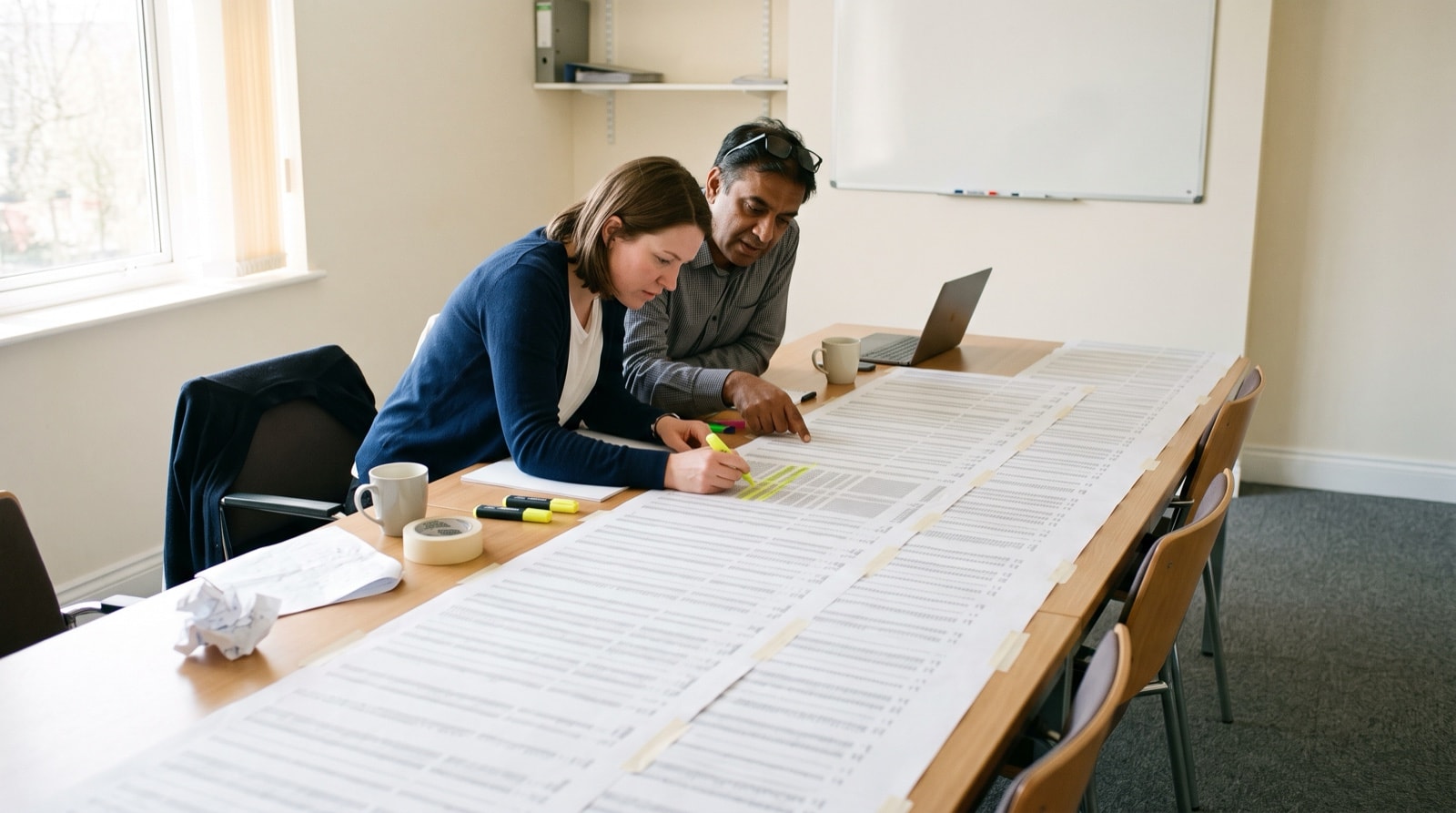
Before you compare a single firm, finish this on paper: a named person will open this on a named device, while doing a specific thing, in order to do a specific thing, instead of whatever they do now. If you can't finish it, no development company can scope it, and you'll buy whichever one was most reassuring in the room.
Once you can finish it, the shortlist gets easy and the map gets much less interesting. Take the sentence to two or three firms and ask each what's wrong with it. The one that pushes back hardest is usually the one worth the drive.
Common questions
Start with who opens it. If the people using it are on your payroll or already your customers, you want a business app: software behind a login that runs quoting, dispatch, job costing, inventory or a client portal. If you need strangers to find, install and open something from an app store, you want a mobile app, and you need a plan for how they will hear about it. Most Markham and York Region businesses searching for app development are describing a business app.
Less than the search implies. Being in the same region buys you a shared working day and the ability to have someone come and watch how the work is really done, which is the single thing remote discovery does worst. It does not make the code better, it does not make anyone accountable for a date, and a local address does not tell you where the build actually happens. Ask who writes the code and where they sit rather than inferring it from a postal code.
Ask what their discovery phase produces and whether you can see a redacted example. Ask who writes the code and where those people sit in month three. Ask which of your existing systems the app has to talk to and whether anyone has read those API docs yet. Ask who owns the code repository, the cloud account and the app store listing on day one. Ask what is explicitly excluded from the scope, in writing.
Nobody can answer that from a search result, and a firm that quotes before scoping is quoting a guess with a price tag on it. What moves the number is how many existing systems it has to integrate with, how many distinct user roles need different permissions, whether it ships through an app store, how clean the data in your current system turns out to be, and how much of the process has to be designed rather than copied. Get those settled in writing before you ask for a figure.
Often yes, and that is usually the faster answer. Most operational software works well in a browser behind a login and can be changed the same day it needs changing. A phone app earns its place when the work happens away from a desk: capturing something at the moment it happens, approving something in under a minute, or being told something that cannot wait. Apple also rejects apps that are essentially a repackaged website, so wrapping your existing site in an app is not a shortcut.
No. Rigoris is Toronto-based and works with clients across Canada and the US. There is no Markham office. What being in the same region gets you is a shared working day and someone who will come and stand on your floor when that is what the problem needs.
More Posts
When to Upgrade Your Business Software (And When Not To)
Before you upgrade your business software, work out whether the tool is the constraint or the process is. A diagnostic for non-technical owners.
Next postWhy Nobody Uses Your Resident Portal
Residents still phone the office after the portal went live. Low adoption is a design and operations problem, and another announcement won’t fix it.